
Proven Leadership, Proven Results
Commissioner Ron Burrows Pursues Fourth Term in Rogers County District 3
By: Value News | Category: Special Interest | Issue: October 2026
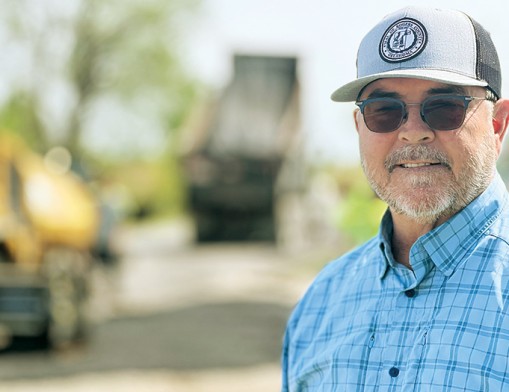
Nearly 12 years of proven leadership as Rogers County District 3 Commissioner, Burrows continues to deliver responsible budgeting, transparent government, and efficient county operations. Photo courtesy of Ron Burrows for Rogers County Commissioner District 3.
For nearly 12 years, Ron Burrows has brought a steady, practical approach to serving Rogers County as the District 3 County Commissioner. As chairperson of the Board of County Commissioners, he helps guide countywide business with a focus on clear priorities and responsible management.
Burrows continues to pull from decades of private sector management and finance experience, including leadership at the Claremore Expo Center and senior retail management roles, to guide his work in county government.
His focus remains clear in areas of fiscal discipline, efficient operations, and practical problem solving. “I believe elected officials must deliver results while treating taxpayers’ dollars wisely,” Burrows said.
For him, that work starts with transparent decision making, effective communication with county staff, and results residents can see. He has prioritized budgets that protect core services and county employees while making targeted investments in public safety, economic development, infrastructure, and community wellness.
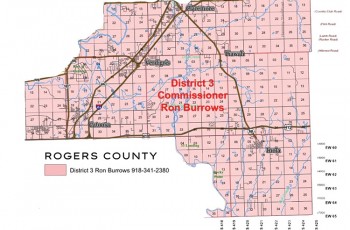
District 3 spans communities across eastern Rogers County, with Commissioner Ron Burrows overseeing 365 miles of county roads and infrastructure. Image courtesy of Ron Burrows for Rogers County Commissioner District 3.
Good Budget Sense
While supporting efforts that reduce long-term costs to taxpayers and produce better outcomes for citizens, Burrows has strengthened county processes to move projects from concept to completion.
“Good budget sense creates more opportunities in many areas that we make decisions on daily. That’s how we build a stronger county,” he said. County government works best when commissioners can discuss issues in public meetings, disagree respectfully when needed, and still stay focused on serving the public. We each bring different perspectives to the table, but our responsibilities are the same, which is to represent our citizens, support our staff, keep essential services and projects moving, and make decisions that are in the best interest of Rogers County citizens,” Burrows said.
That same practical approach extends to Burrows’ involvement with the National Association of Counties (NACo), where he has presented and received ideas that can be adapted to local and national needs.
His committee work gives him opportunities to learn from county leaders across the country, share Rogers County solutions, and bring useful insights back home to benefit Rogers County and other Oklahoma counties.
Mental Health Initiatives
Among those national conversations, mental health has stood out as one of the most pressing challenges facing counties, along with other issues that continue to shape county government priorities.
“Mental health emerged in recent years as a leading public concern and top issue for local governments and counties across the U.S. with rising rates of anxiety, depression, and service gaps that challenged counties and cities to find scalable, accessible responses,” he said.
Burrows networked with Erie County (New York) at a NACo conference to learn from their work with a mental health resource app. The Rogers County Commissioners are working together to launch the “Better Together Connect” mobile mental health crisis app.
“We look for proven ideas elsewhere and adapt them to fit Rogers County. This mobile app will put immediate and long-term resources in the hands of all our citizens in need,” Burrows said.
Infrastructure Maintenance
Burrows also advanced a data driven pavement management process that uses GIS services to inventory and monitor road conditions throughout Rogers County. The system records pavement status and helps prioritize repairs or replacements based on condition and lifecycle, potential cost, and gives him and his road foreman a clearer way to plan projects based on priority and funding. The goal is to make road safety, pavement life, and limited resources easier to manage.
“With the number of road miles in District 3, it is not realistic for us to personally drive, record, and document every condition on every road. This system gives us an efficient, data driven way to identify needs, set priorities, and make the best use of limited road funding,” he said.
Infrastructure work is about more than fixing one road or filling one pothole, he added. It is about having systems, equipment, and responsible budgeting in place to respond to everyday needs while planning larger projects.
Burrows said Infrastructure needs are substantial; the pavement system has identified $30-40 million for repairs on critical roads and bridges in his district.
“The one-penny sales tax generates $4 million annually per district for road repair, equipment, and payroll. The district receives a large volume of work orders annually, limiting road improvement capacity to about 20 miles per year of new road surface.
To give more insight into those efforts, since 2022, District 3 has processed 3,115 work orders. Some requests remain “open” because they are bundled into larger road rehabilitation projects and remain active until the broader project is complete.
Work volume is also seasonal, with peak activity typically occurring in the first half of the year.
District 3’s infrastructure work is spread throughout the district, with the highest volume of work orders originating in Inola (680), Claremore rural (505), Verdigris (448), Inola rural (312), and Catoosa rural (251).
Potholes and mowing related tasks remain among the most frequent service categories, along with culvert installations, culvert evaluations, and road repairs.
Road Safety Initiatives
“Every completed work order represents a real issue for a citizen, and our goal is to handle those needs efficiently, safely, and in a way that makes the best use of taxpayer dollars,” Burrows emphasized. “Public safety is our year-round priority, and that includes keeping our roads clear and visible. During the spring and summer, vegetation grows faster than our crews can mow, which creates visibility hazards.”
To address this, Burrows joined other counties and the state to implement a targeted vegetation management program using Shuterra, LLC. Shuterra has contracted with over 40 counties and manages 7,500 miles of county right-of-way. While the application may appear unattractive during the initial phase, Burrows emphasizes that this is a sign of the process working.
“It’s important for residents to know that the visual change is temporary,” he explained. “As the treatment suppresses invasive Johnson grass and weeds, it creates the space for native Bermuda grass to take over. After a few rainfalls, the Bermuda grass thrives, creating a much cleaner, more uniform look. Not only does this enhance road safety and driver visibility, but it also saves a significant amount of taxpayer dollars by reducing the need for constant, labor-intensive mowing.”
To prepare for winter weather, District 3 invested in brine equipment and operating routines that allow crews to treat miles of county roads days before storms arrive at a fraction of previous costs.
“The goal is to be prepared before the storm hits. With the brine program, our crews can treat more road miles in advance, improve safety for drivers, and save taxpayer dollars at the same time,” he said.
Proactive Infrastructure Management
He added, “Responsible budgeting means planning beyond today’s needs and making decisions that strengthen the county for the long term. Looking ahead will always bring new challenges, but looking back shows the importance of having clear strategies, steady planning, and practical systems in place.”
For Burrows, the progress District 3 has made reflects not only better processes, but also the commitment of the crews carrying out the work every day.
“When I look back at where we started and compare it to the volume and complexity of the work we handle today, I’m incredibly proud of our team’s performance. We aren’t just reacting to problems; we’re proactively managing our infrastructure. Whether it’s a quick repair or a long-term rehabilitation project, every work order represents our commitment to keeping Rogers County moving safely and efficiently.”
Opioid Abatement Program
Burrows’ major accomplishments and initiatives in opioid abatement, fiscal stewardship, economic development, and regional partnerships help shape the county’s growth in several areas.
The City of Claremore’s and Rogers County’s Opioid Abatement program is now in its third year of operation. Supported by a three-year grant and multiple funding sources, the project achieved maximum-tier funding of $1,050,000. Through agency partnerships and contract awards, the program strengthens accountability and service delivery. It also expanded GED and high school equivalency programming in the county jail, beginning in March 2025, which has served 86 students with an 80% pass rate across 44 tests. Programming has also expanded into sober living homes, with plans to add classes at Live Free using opioid settlement dollars.
The partner’s opioid abatement strategy is a comprehensive framework designed to combat the drug epidemic through evidence-based prevention, treatment, and resource distribution funded by national settlements.
Managed by the Oklahoma Opioid Abatement Board, the state provides critical grants to local subdivisions to support holistic initiatives such as expanding Medications for Opioid Use Disorder (MOUD), increasing naloxone access, and investing in long-term stability through supported employment and housing.
“We are committed to using these settlement funds to create a real, measurable change in our community. By prioritizing these evidence-based programs, we aren’t just treating the symptoms of the epidemic; we are building a foundation of support, education, and stability that gives our citizens a genuine path to recovery and a better future,” he said.
Burrows Service and Committee Work:
- Numerous Oklahoma boards and committees
- Representing Oklahoma on the NACo Board
- Vice Chair, NACo, Transportation Policy Steering Committee
- Vice Chair, NACo International Economic Development Innovation Council
- Oklahoma Disaster Recovery Task Force
- NACo Veterans and Military Service Advisory Council
Reflecting on his time as commissioner and his hopes to continue serving, Burrows said,
“I am grateful for the trust the people of District 3 have placed in me. I asked for your vote this November 3 so we can continue delivering practical solutions, responsible stewardship, and stronger services for the communities I serve.”
Ron Burrows Top 5 Accomplishments
- Nearly 12 years of proven leadership
- Modernized infrastructure planning
- Improved public safety and reduced costs
- Advanced community wellness initiatives
- Secured and expanded opioid abatement programs
Ron Burrows For Rogers County Commissioner
For more information, contact:

More about Ron Burrows For Rogers County Commissioner:
More ArticlesCurrent Coupons/OffersSubscribe
For Free!